Scripta minora 29
Jonatan Pettersson et al. (red.): Nya testamentet på svenska 1526. Boken språket och teologin (2026, 564 s.). ISBN: 978-91-88568-88-5. 200 SEK.
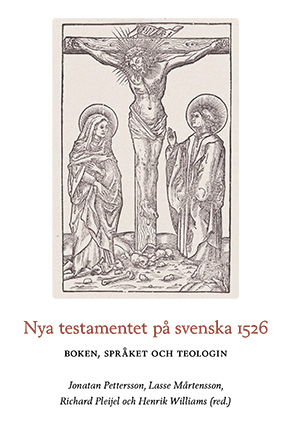 Den 15 augusti 1526 publicerades den första översättningen av hela Nya testamentet till svenska (NT 1526). Boken trycktes av Jürgen Richolff i det kungliga tryckeriet, som då var inhyst i Själagården i Gamla stan i Stockholm.
Boken har en särskild plats i den svenska historien, särskilt vad gäller svenska språket och kyrkohistorien. Den kom ur den europeiska reformationen och humanismen men också ur den politiska situationen då det svenska riket bröts loss från den nordiska Kalmarunionen. I språkhistoriska framställningar får NT 1526 ofta utgöra en gräns mellan medeltidens och den nya tidens svenska. Det är förstås en förenkling, men verket är ett centralt vittne till en period av dramatisk förändring i svenskans grammatik, ordförråd och stavning, och med NT 1526 tas ett tydligt steg mot den moderna skrivna svenskan. Genom att den införlivades i Gustav Vasas bibel från 1541 – om än i bearbetad form – levde översättningen kvar fram till 1917 års nyöversättning av hela Bibeln och påverkade därmed det religiösa livet under mycket lång tid.
I antologin presenteras forskning från en tvärvetenskaplig konferens om NT 1526 som hölls i Uppsala 2024, med anledning av det stundande 500-årsjubileet. Volymen samlar bokhistoriska, språkhistoriska, filologiska och kyrko- och missionshistoriska forskningsbidrag som belyser boken i sig och hur den kom till, de sammanhang där den skapades och togs emot och hur den kom att användas i historien.
 Already at the end of the 12th century, even before the University of Paris was established, Swedes applied to Paris for studies. In the beginning they were few; in time they would become many. The greatest number arrived in the early 14th century, when about 30 Swedes were resident in Paris every year. In all, almost 500 Swedes must have made the difficult journey, by land and sea, to seek spiritual improvement at one of the many schools on the Left Bank.

 The presence of Swedes among the students and masters at the medieval universities of Cambridge and Oxford has long been presumed, although little evidence remains. Assembled in this volume are several articles and newly-edited documents testifying to the intellectual contribution of Swedish academics in England during the Middle Ages. Items as prosaic as a student’s handbook, a loan chest, and a thank-you letter home witness the experiences of scholars who went against the dominant trend of Scandinavians studying on the Continent. Sometimes the evidence revealed here has significant ramifications. For instance, the work of natural science prepared by Tideman of Närke is shown to be simple and derivative, but a comparative analysis of the text reveals it to be a piece of a tradition extending from medieval writings on the Termini naturales to the first printed books of the Libellus sophistarum ad usum Cantabrigiensis and the Libellus sophistarum ad usum Oxoniensium, hitherto unnoticed. Original research and critical editions complete the documentation.

 Words and Matter presents new work on the reception of the Mater Dei. Although a minimal presence in the Bible, the virgin Mary figured prominently in the cultural artefacts produced in the Middle Ages and even after the Reformation. As words, she dwelled in exempla, sermons, prayers and plays. As matter, she imprinted church windows, wall paintings and illuminations. In her various manifestations, mary engaged the senses, minds and bodies of the faithful. The studies in this collection span the Nordic countries, Ireland, England and southern Europe during the later Middle Ages and the Reformation. However, all the essays in Words and Matter are grounded in the practices of the late medieval and early modern parish and the beliefs of the ordinary faithful.